Hello Potter

The actual spell is called “Lumos”. It illuminates the end of a magic wand to light up like a flashlight. Last week, I received my belated birthday gift from my house-mate – a Harry Potter Replicate “Illuminating Motion-Activated” Wand by Noble House. Swing the wand and the light turns on. Pretty useful in a dark room when you need a small light to read a book. Or a romantic candle-light dinner when you run out of candles. Perfect light-stick for concerts and National Day Parade. And a good light-painting tool! I was so intrigued by the bright magic light that I bought a new wand for my little wizard back home! Now, I can “Expelliarmus” him on Face Time this weekend.

Lord of the Rings

(Photo Taken: An outdoor game tent at Drum Tower Street, Tianjin, China – Toss and ring your winnings! Unless you are the lord of the rings, this simple-looking game is not going to yield big winnings. But it does bring laughter and the “good-old-days” atmosphere.)

The Heavenly Ford of China – Tianjin (天津)

Like many Chinese cities, Tianjin (meaning “Heavenly Ford” – named by Emperor YongLe) is another exceptional historically rich place to visit. She was once occupied by 9 great nations before the founding of modern China. Today, Tianjin bears marks of her past invaders (Italy, Germany, France, Russia, Great Britain, Austria, Japan and Belgium). There are a lot of European buildings scattered (and well-conserved) in the city, giving Tianjin an unique “European-Oriental” feel.

July is possibly the worst time of the year to visit Tianjin. Weather is extremely hot, hazy and humid. This is Tianjin’s hottest and wettest month. Still, I managed to cover some of its major attractions outside my working hours on Sunday and late Monday afternoon. Not bad for a short 48-hour business trip. It is good that I have the good company of Kelly and Desmond. Poor them – I dragged them for a speedy “touch-&-go” tour with me.

Here are my Top 5 Favorite City Moments in Tianjin:

NUMBER 1 – THE PORCELAIN HOUSE
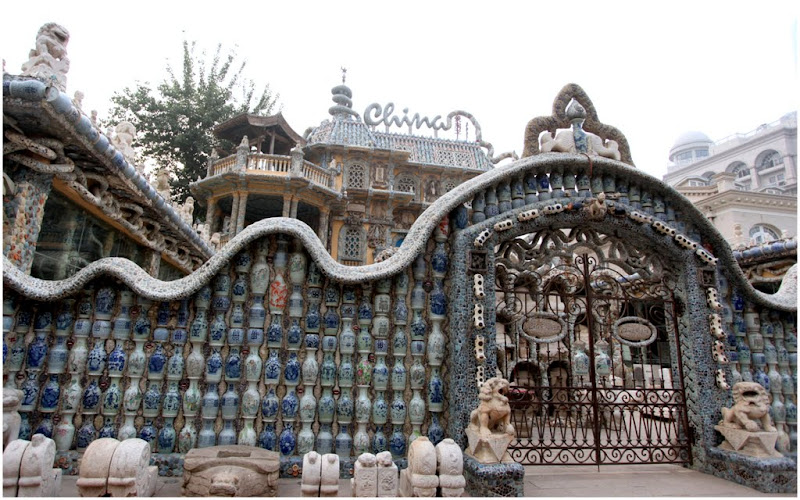
Located in the “5 Great Avenues” – Built over 5 years and decorated with about 400 million pieces of ancient Chinese ceramic chips and over 13,000 ancient Chinese porcelain vases, plates and bowls, the Porcelain House is an uncanny Ceramic Museum. The owner (Zhang Lianzhi) took over 20 years to collect the porcelains and more than 5 years to decorated the building. This massive and expensive project cost the owner more than USD65 million. The owner owns 2 “Porcelain” buildings – 1 museum and 1 restaurant. (Entry Fee: RMB35/adult. Address: No.72 Chifeng Avenue, Heping District Tianjin 300041)

NUMBER 2 –
TIANJIN TROPICAL INDOOR BOTANICAL GARDEN (天津热带植物观光园)

Covering 3,000 acres, this is Asia’s largest indoor botanical garden. It houses over 100,000 species of plants from tropical and subtropical regions. Despite the hot 34-degree weather, I found it pleasantly cooling strolling inside this giant greenhouse. Beautiful landscaping with big man-made waterfall, lakes, caves and a mini Mayan Pyramid. (Entry fee: RMB50/adult. Address: 300 m North of Bridge, West Outer Ring Line7, Xiqing District Tianjin 300384)


NUMBER 3 –
SUNSET AT TIANJIN HAI RIVER (天津海河)
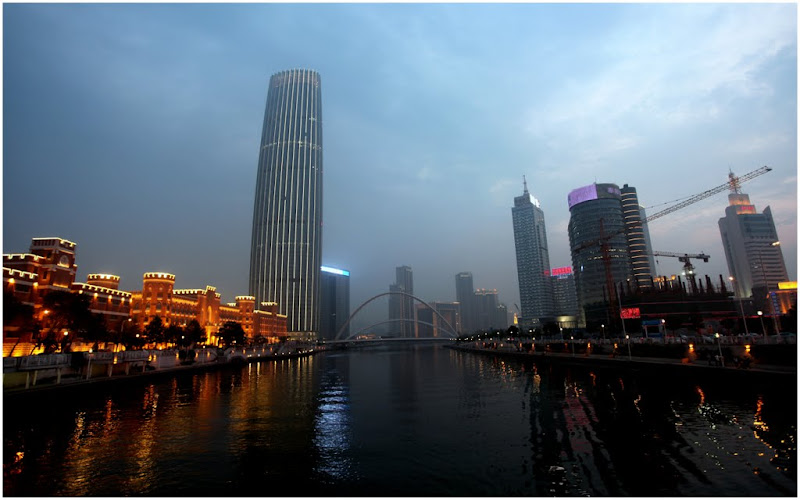
The night view over Hai River is calm and beautiful at night. At Jiefang Bridge, we saw many people sitting on the concrete river bank enjoying the cooling sunset. Traveling on the cab along the river, we saw many different bridges – from old to modern. Here, you will find the world’s 4th largest 120m tall Ferris Wheel, “Tianjin Eye” (or the largest Ferris Wheel ever built on a bridge).


NUMBER 4 –
DRUM TOWER OLD STREETS (鼓楼东街)
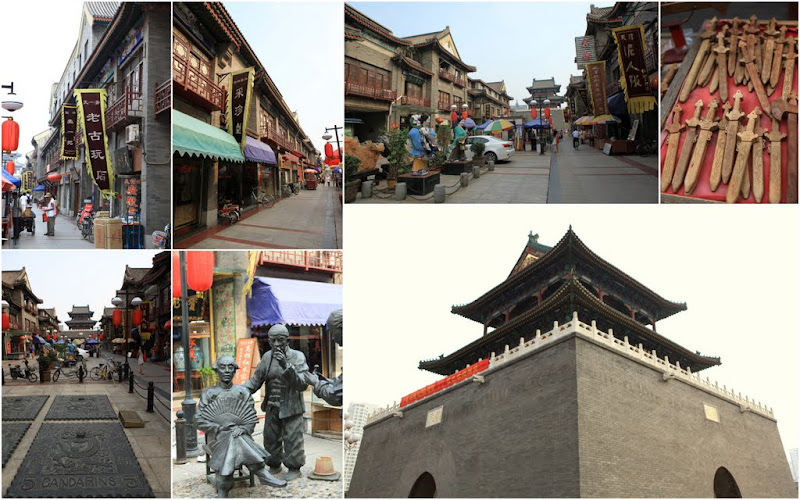
The Drum Tower is situated in the center of the ancient town where 4 old Chinese streets (north, south, east and west) meet. It is like taking a walk in an old Chinese town. Except this is a tourist place where we find lots of shops selling typical local handicrafts and souvenirs.

NUMBER 5 –
 BINJIANG SHOPPING STREET – SHOPPING AND DINING (滨江路购物街)

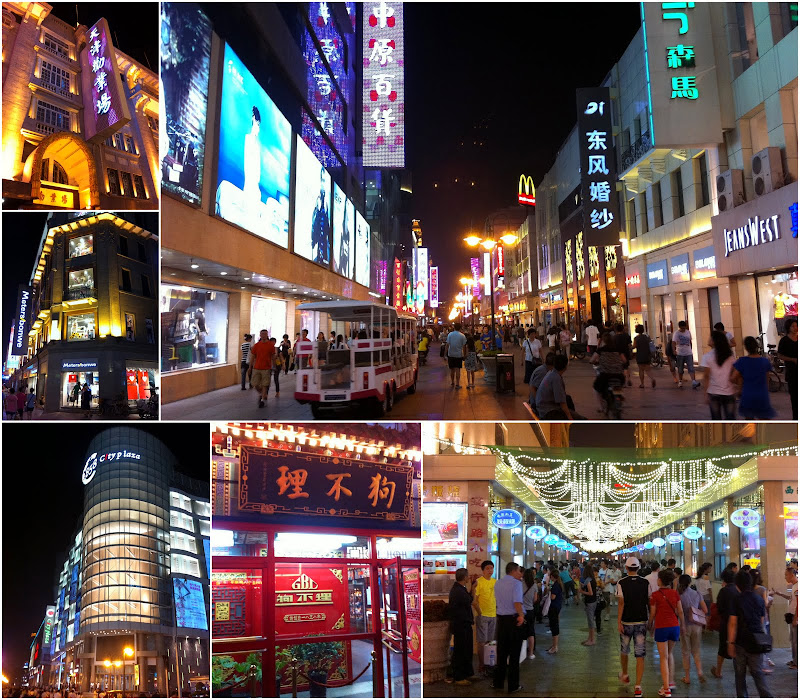
Like most “Bu Xing Jie” (步行街) in China, this is the busiest pedestrian-shopping-street in Tianjin. Long buzzing streets lined with tall shopping malls on both sides. (Feels very much like the Nanjing Bu Xing Jie in Shanghai or Beijing). Here, we found the main shop of the world’s famous Tianjin “Goubuli Buns – 狗不理包子“!


The bun has an interesting product story.
If you translate the name literally, it means “Dog Ignore Bun”. The word “Dog (狗)” doesn’t mean the animal but the actual name of the chef who made these buns. His dad (a farmer) named him “Baby Dog” for safety and good blessing. Dog came to Tianjin at the age of 14 and started his apprenticeship at a local steam food shop. He was so good in his cooking skills that he started his first shop in 1858.  It was said that when Dog was making the buns, he was so engrossed in the process that he was not responsive to anyone. His customers gave him the nickname “Dog Ignore (狗不理)”. When General Yuan Shikai was training his troops in Tianjin, he offered Dog’s buns to Empress Dowager Cixi. She fell in love with the buns and praised “The bun is tastier than any beasts in the forest, birds in the sky, lambs on the plains and fish in the ocean!” From then on, Goubuli Buns (狗不理包子) became a well-known brand in China.

Free Hugs – Spread the Movement by Juan Mann

A hug is like a magic blanket. No matter how dim my day is, a little hug from Elkan brings great joy and comfort. No needs for words, a simple hug heals my day. It is magical and I call them “happy power”.

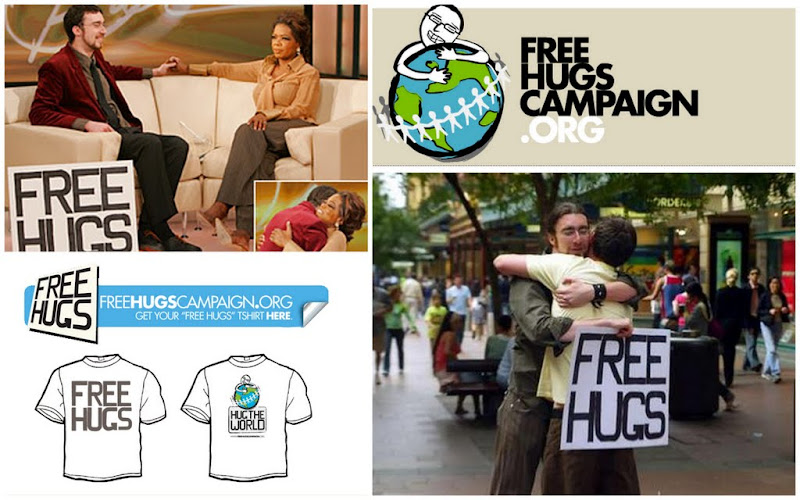
“Free hugs Campaign” is a real life controversial story of Juan MannA man from Sydney whose sole mission was to reach out and hug a stranger to brighten up their lives. This campaign was banned in 2005 by the official in Sydney but Juan’s movement inspired a worldwide phenomenon. The ban was lifted after a petition of 10,000 signatures the following year.

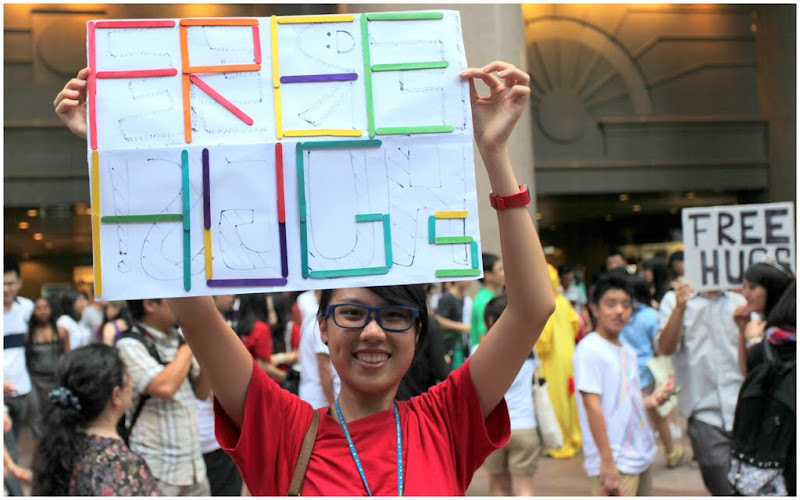
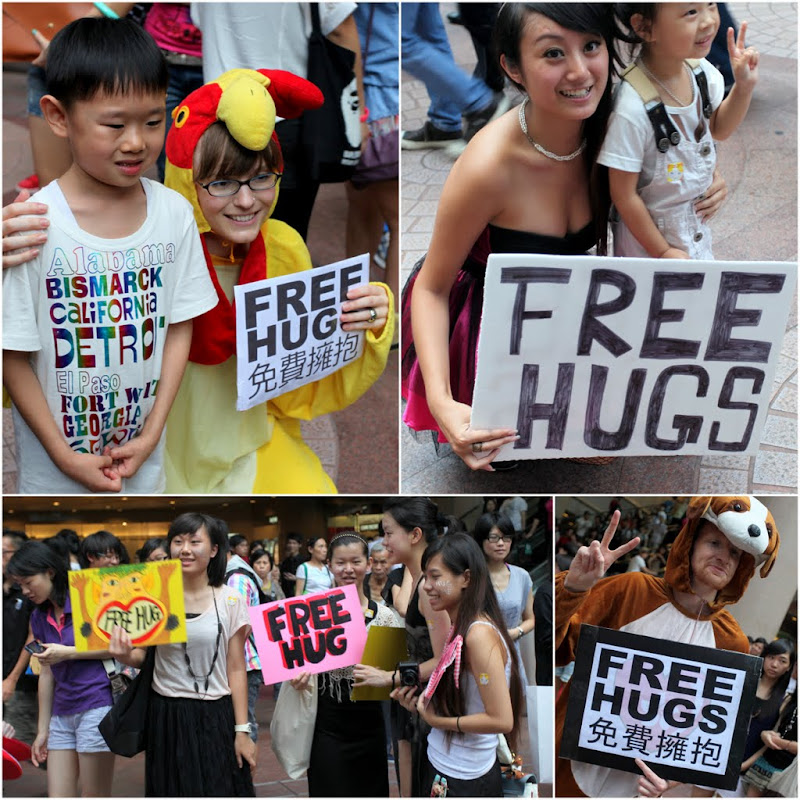
We were shopping in Times Square today and what we witnessed this afternoon can only be described as awe inspiring. Hugs can be very infectious. It removes the “zombie” in us and brings the jolly old spirit back. A group of strangers, with smiles on their face, carrying flash cards and offering hugs for everyone. Silently and magically, they changed the atmosphere. Gone were the monotonous zombie-like shoppers. Perfect strangers from different walks of life came together and hugged. This simple unison between strangers brought out the most sparkling smiles from within. For a rare moment, we witnessed a priceless portrait of joy and the true spirit of humanity.


Free Hugs Campaign – How it started on 30th June 2004

By Juan Mann (Abstract from his website): I’d been living in London when my world turned upside down and I’d had to come home. By the time my plane landed back in Sydney, all I had left was a carry on bag full of clothes and a world of troubles. No one to welcome me back, no place to call home. I was a tourist in my hometown.

Standing there in the arrivals terminal, watching other passengers meeting their waiting friends and family, with open arms and smiling faces, hugging and laughing together, I wanted someone out there to be waiting for me. To be happy to see me. To smile at me. To hug me.

So I got some cardboard and a marker and made a sign. I found the busiest pedestrian intersection in the city (Pitt Street Mall) and held that sign aloft, with the words “Free Hugs” on both sides.

And for 15 minutes, people just stared right through me. The first person who stopped, tapped me on the shoulder and told me how her dog had just died that morning. How that morning had been the one year anniversary of her only daughter dying in a car accident. How what she needed now, when she felt most alone in the world, was a hug. I got down on one knee, we put our arms around each other and when we parted, she was smiling.

Everyone has problems and for sure mine haven’t compared. But to see someone who was once frowning, smile even for a moment, is worth it every time.

Marching with 220,000 Hong Kongers (七一遊行)

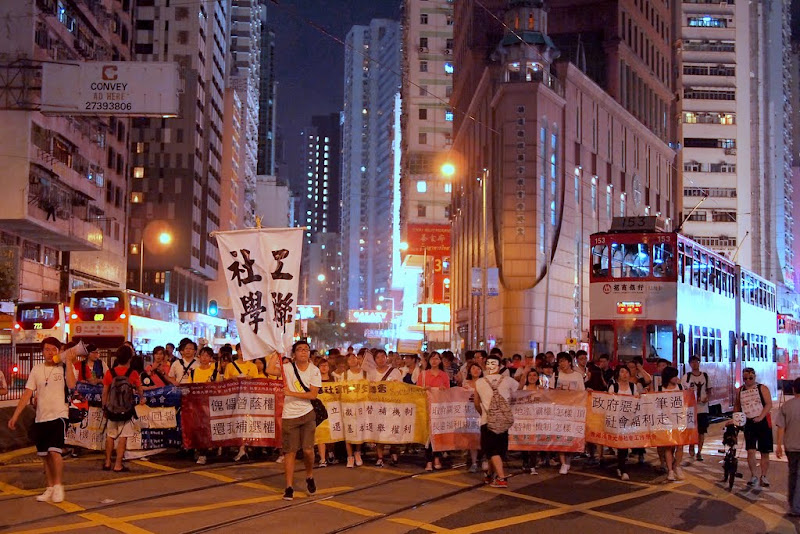
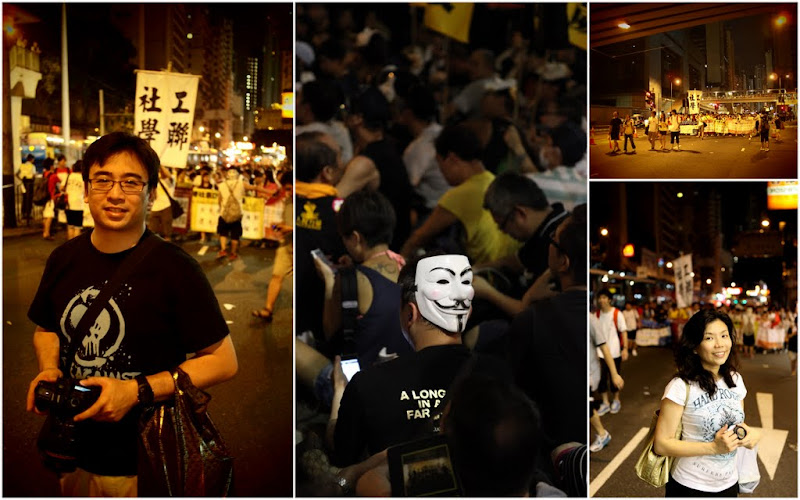
Hong Kong celebrated her 14th Handover Anniversary with the biggest march turnout in 7 years (500,000 in 2003). While Donald Tsang was staging a big celebration at Queen Elizabeth Stadium last night, a record of more than 200,000 protesters turned up on the streets to vent their anger and frustration against his government and major social issues.

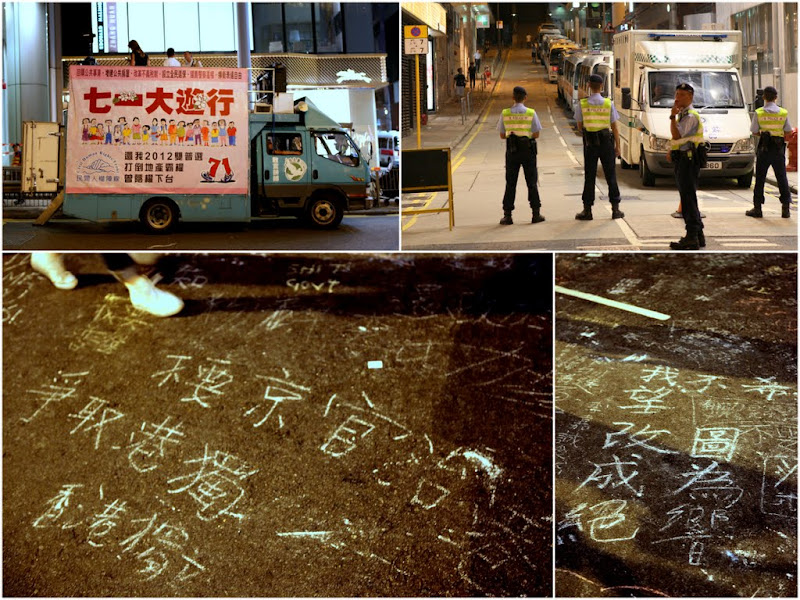
Many of the protesters were unhappy about the skyrocket property prices and the growing gap between the rich and poor. Pegged with the falling US currency, Hong Kong dollars have fell sharply since the day I arrived. Property prices are ridiculously high and young families can never afford the down-payment. (The young generation of Hong Kong is going to slog their entire life just to pay for a pathetic small roof to sleep at night!) Many called for greater democracy and demanded Chief Executive Donald to step down. Large printed banners of characterized “Devil” Donald and “Blood Sucker Vampire” billionaire tycoon Li Ka-shing marched down the streets – the protesters accused the government and property tycoons for manipulating the property prices.

Tracy and I decided to lend our voices and joined the evening march from Wanchai to Central.  There was a commotion at Wanchai where police were out in force handing out warnings about “illegal public gatherings” (according to protesters) and closing off a ballpark.  This is the first time I took part in a march. It was an eye-opener for me to “see and feel” the passion and frustration of the Hong Kong people. Streams of protesters stopped traffic and won supports (waves and cheers) from the bystanders along the streets. It was a powerful united force.

Sadly, the property issues cannot be addressed or solved overnight. Property is one of the most abused necessities that should never be allowed to be speculated for greed. Already, some protesters are crying that it may take them 2 generations to pay off their housing debts. Real estates should never exhaust the value of one’s life. The high cost of real estates are adding significant cost to the food we eat, clothes we wear and the space we nurture our next generation. Freedom in this perspective doesn’t exist. It will take many years of fundamental and political changes before the Hong Kongers can break away from their current “property slavery”.